24 hour support for existing clients


24 hour support for existing clients
Wave Fiber Technologies3 min read

A client with a four-storey building asked us why the cabling quotation was so much more than the price of the cable multiplied by the length. It is a reasonable question, and the answer is that structured cabling is a labour job with a materials component, not the other way round. The cable is one of the cheapest things in it.
Not the cable. The cable is a small fraction of the bill, and the ceiling is most of the rest.
What drives the figure is how hard each run is to get in. A run through an open suspended ceiling on one floor is quick. The same run through a solid slab, a fire compartment wall, or a plastered corridor in a building that is already occupied is a different job with different trades and permissions attached. Distance matters, but difficulty matters more, and the two are not correlated.
The number of floors matters more than the floor area, because every floor you add is a riser, a cabinet, and a set of vertical runs between them. A single large floor is usually cheaper per outlet than the same area stacked four high.
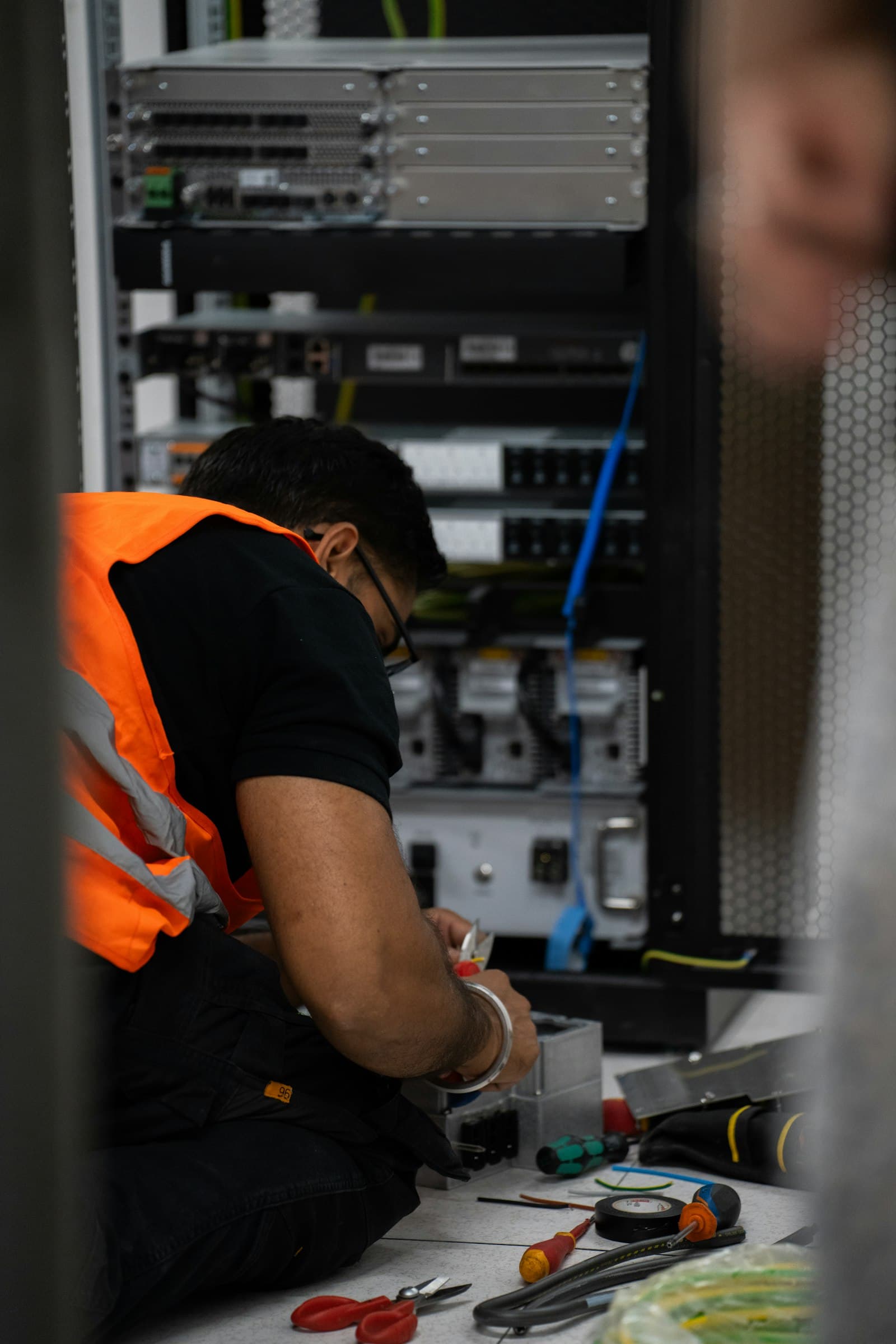
Then there is whether the building is empty. Cabling a shell during fit-out is the cheap case: the ceilings are open, nobody is working under you, and the programme is yours. Cabling an occupied office means evenings and weekends, dust control, moving furniture, and doing a floor in pieces so that people can work on the parts you are not in. That is sometimes twice the labour for the identical result.
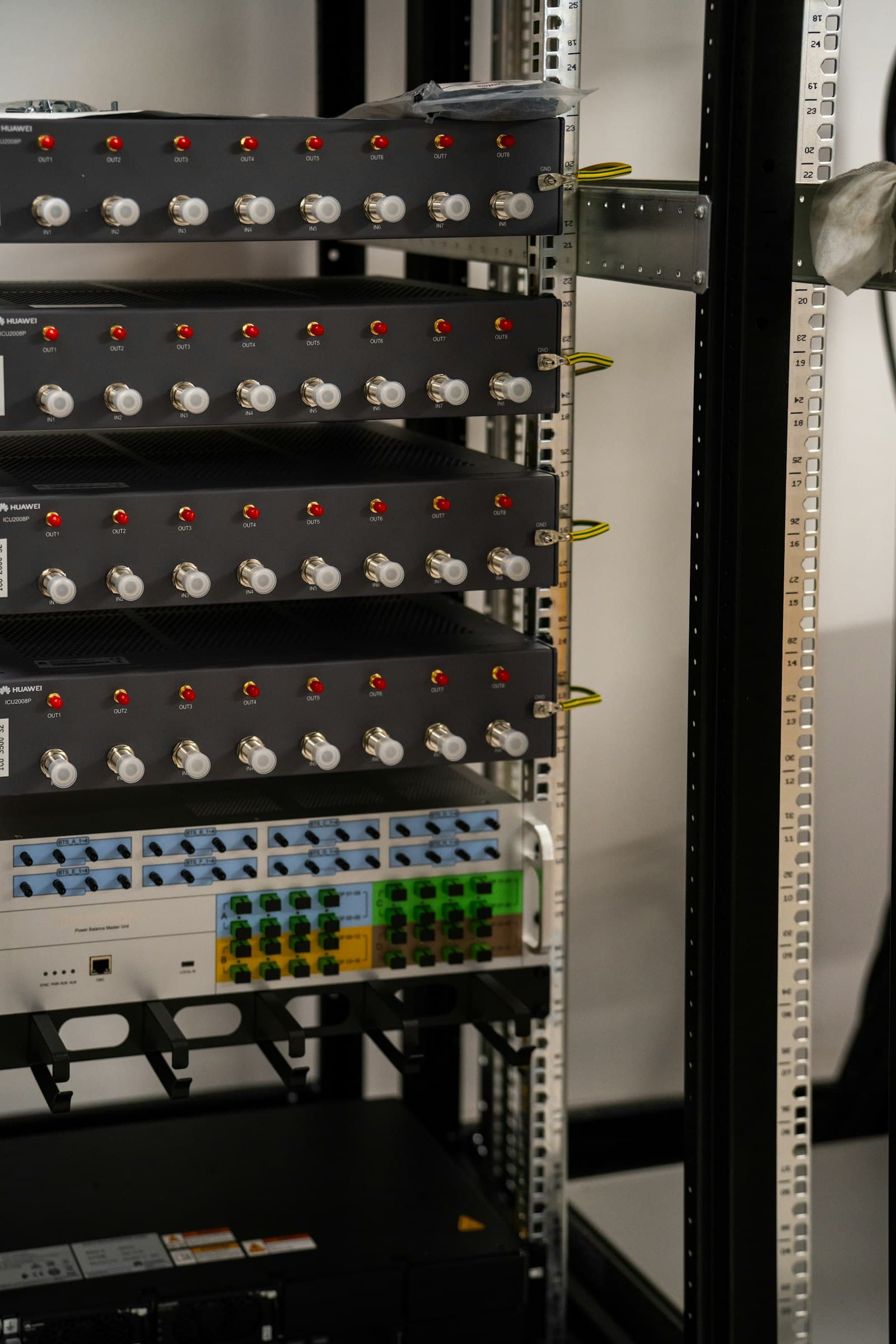
Distance imposes a hard rule that catches people out. Copper runs have a maximum length, and once a desk is further than that from the cabinet you cannot solve it with more cable. You need another cabinet, which means another room, power to it, and fibre back to the core. On a long building that single constraint can set the whole design, which is why the cabinet positions are worked out before anything is priced.
The outlet count is the part clients control and usually underestimate. The desks are easy to remember. The things that also need a socket are cameras, access control readers, wireless access points in the ceiling, printers, door entry panels, the screen in the boardroom and the till. A building specified for desks alone gets retrofitted for all of those at the worst possible time, which is after the ceiling is closed.
Testing and documentation are the last line, and the one that is quietly dropped from cheaper quotations. Every run should be tested to its category and the results handed over with a labelled schedule. Without it you have cable that probably works, no evidence, and nothing to hand the next engineer. That is the difference between an installation and a pile of wire, and it is worth insisting on in writing.
The practical advice is simple: get the cabinet positions and the outlet schedule right before you compare prices, and put the spare runs in while the ceiling is open. Both are cheap now and expensive in two years.
Written by the engineers who do the work, and worth reading against the date it carries: what is true of this equipment changes.




Send us the building, the distances and the problem you are solving. We will come back with a survey date and an honest view of what it takes.
Ask an engineer